
Not another LLM. A better translation engine.
Opal is the AI translation engine built for enterprise multilingual content. Higher benchmark quality than general-purpose MTs, nMTs or LLMs. Segment-level confidence scoring you can trust. API-first, so it fits the workflows you already run.

Performance Metrics
Aggregate confidence

New strings
Active
Throughput
14,800 req/min
Latency
28ms
Human Review
0.2%
THE REAL PROBLEM
Your translation stack was built for a slower world.
Content velocity has outpaced every assumption behind traditional language operations. Manual hand-offs. Version drift. Subjective quality debates. Rising unit costs on the exact content types that matter most for growth.
Switching TMS doesn’t fix that. Neither does bolting a bigger LLM onto the front of the same workflow. The fix starts with a better engine. Opal is a translation-first AI, trained on production multilingual data, calibrated to your content, and benchmarked publicly against the leading general LLMs. It’s the piece your operation was missing.
General-purpose LLM

Trained on scraped web text
One quality bar, take it or leave it
Generic across languages and domains
Black-box on how it made a call
Sold as a chat interface


Trained on decades of production translation data
Segment-level confidence scoring on every output
Calibrated per customer, per content type
Auditable outputs, benchmark-ranked quality
Delivered as an API into the systems you already run
HOW OPAL WORKS
Not a general LLM.
A specialized translation engine.
Opal is an AI engine trained specifically for producing multilingual content at production quality. Four things separate it from a general-purpose model.

Trained on production translation data
Higher out-of-the-box quality than general LLMs on the content types you actually publish. Continuous consistency to your tone.

Calibrated to your content
Better quality on the content unique to your business, without prompt-engineering workarounds.

Confidence-scored at the segment level
You stop treating machine translation as pass/fail and start treating it as data your team can act on.

API-first, ecosystem neutral
Adopt Opal without ripping and replacing anything already working.
WHY OPAL
Purpose-built beats general-purpose.

#1

Segments
Benchmark quality that’s documented, not asserted
In Welocalize’s Opal Benchmark 1.0; blind linguist review, multiple annotators, published methodology, Opal’s output was ranked #1 on the majority of segments, 19ppt ahead of the 2nd ranked MT.
Why it matters: You don’t take a vendor’s word for quality. The methodology and numbers are on the page. You can inspect them and compare.
Memory that compounds, not resets
Your translation memory and glossary feed into Opal’s inference process itself; not a lookup step tacked on at the end. The engine generates output that’s already consistent with terminology and phrasing your team has approved before.
What this means for you: Higher out-of-the-box quality than general LLMs on the content types you actually publish.

Inference
Context Loaded

Translation Memory
Approved Terminology
Brand Voice
Previous Content
Ready to generate

PROOF
The lead isn’t a fluke of one language or one client.
Opal Benchmark 1.0 tested five MT systems across seven enterprise accounts, ten target locales, and five content specialties. The direction of the result held everywhere.
10 / 10
Target languages where Opal outperformed the leading generic MT engine.
5 / 5
Content specialties: product, support, marketing, medical, service; where Opal came out on top.
Source: Welocalize Opal Benchmark 1.0
Trust signal: how the benchmark was run
Blind annotation. Multiple linguist reviewers per segment. Segment-level scoring across seven enterprise accounts. Published methodology, published results.
If a vendor claims MT quality without telling you how they measured, you’re being asked to believe. Opal’s numbers are inspectable.
GETTING STARTED
Priced by word consumption. Tuned to your content.
Opal is billed by the volume of words processed. Pricing is quoted for your content mix and volume.
Every engagement starts with calibration: the engine is tuned to your terminology, style, and existing translation memory before it enters production. That’s where the quality lift compounds: the Opal that goes live for you is not the Opal running for anyone else.
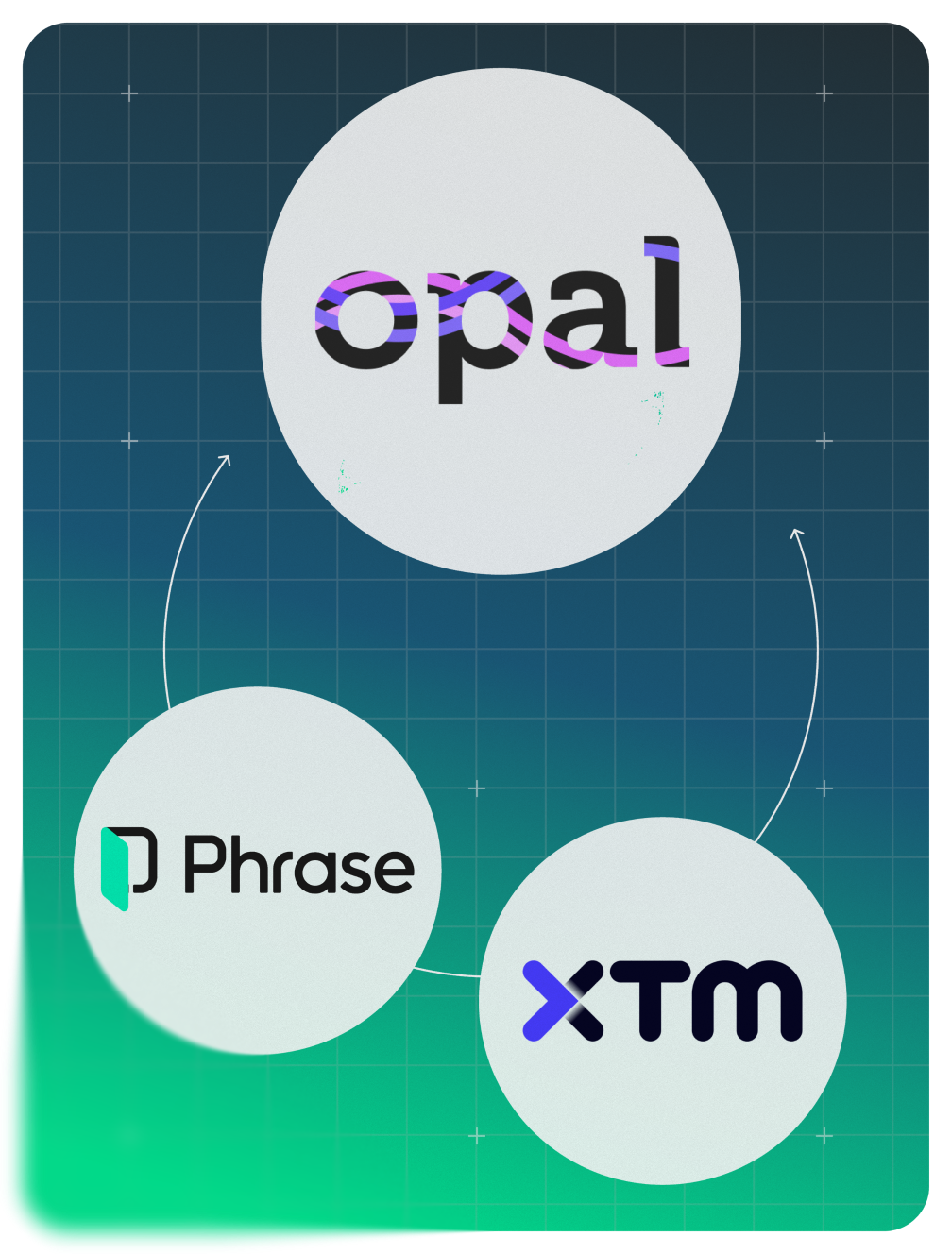
Opal is available directly from Welocalize and inside partner platforms including Phrase and XTM; so you can access it inside the tools your team may already use.
WHATEVER YOUR STARTING POINT
Same engine. Different starting points.
Opal is engineered for enterprise-scale content operations. It’s also lightweight enough to start small.
If you already have a mature localization operation
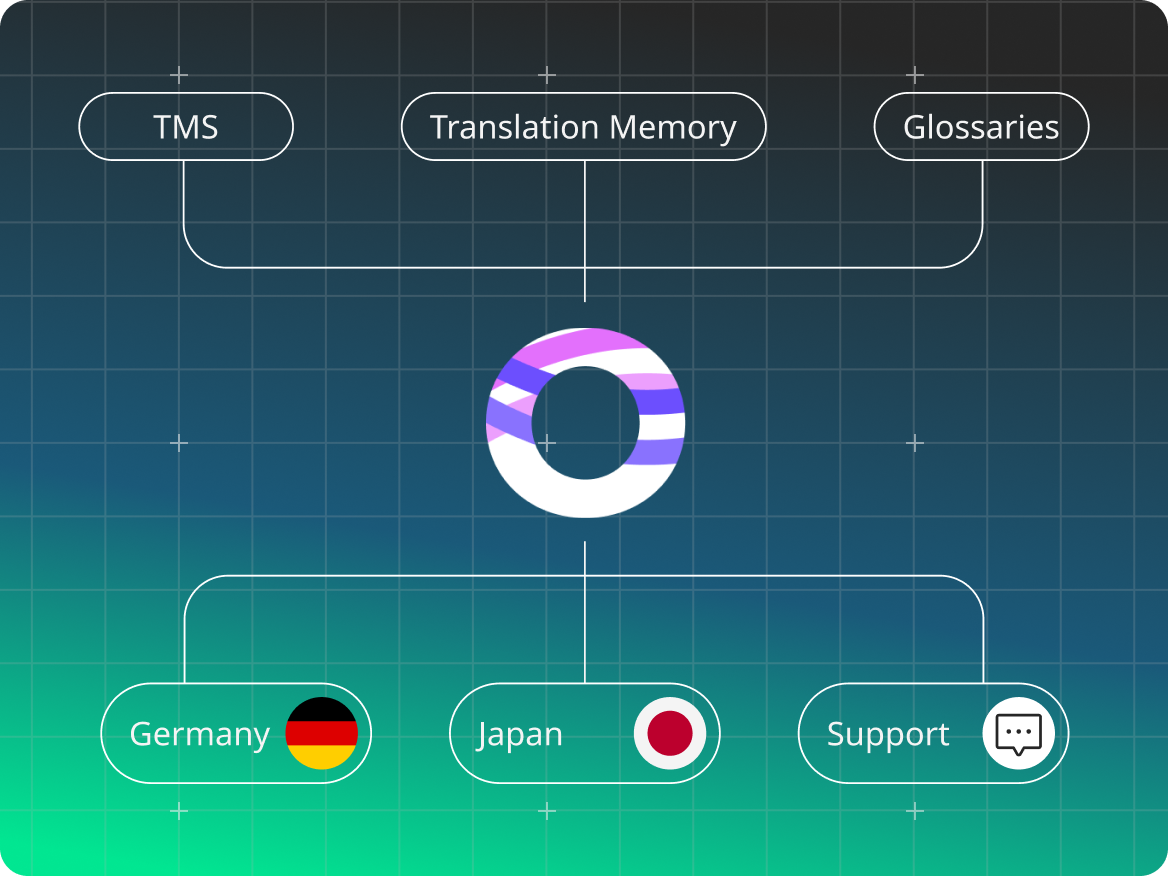
Opal drops in alongside your existing TMS, translation memory, and glossaries. Calibration reuses everything you’ve already built. Rollout is scoped by market or content type by content type; no rip-and-replace.
If you’re scaling localization for the first time
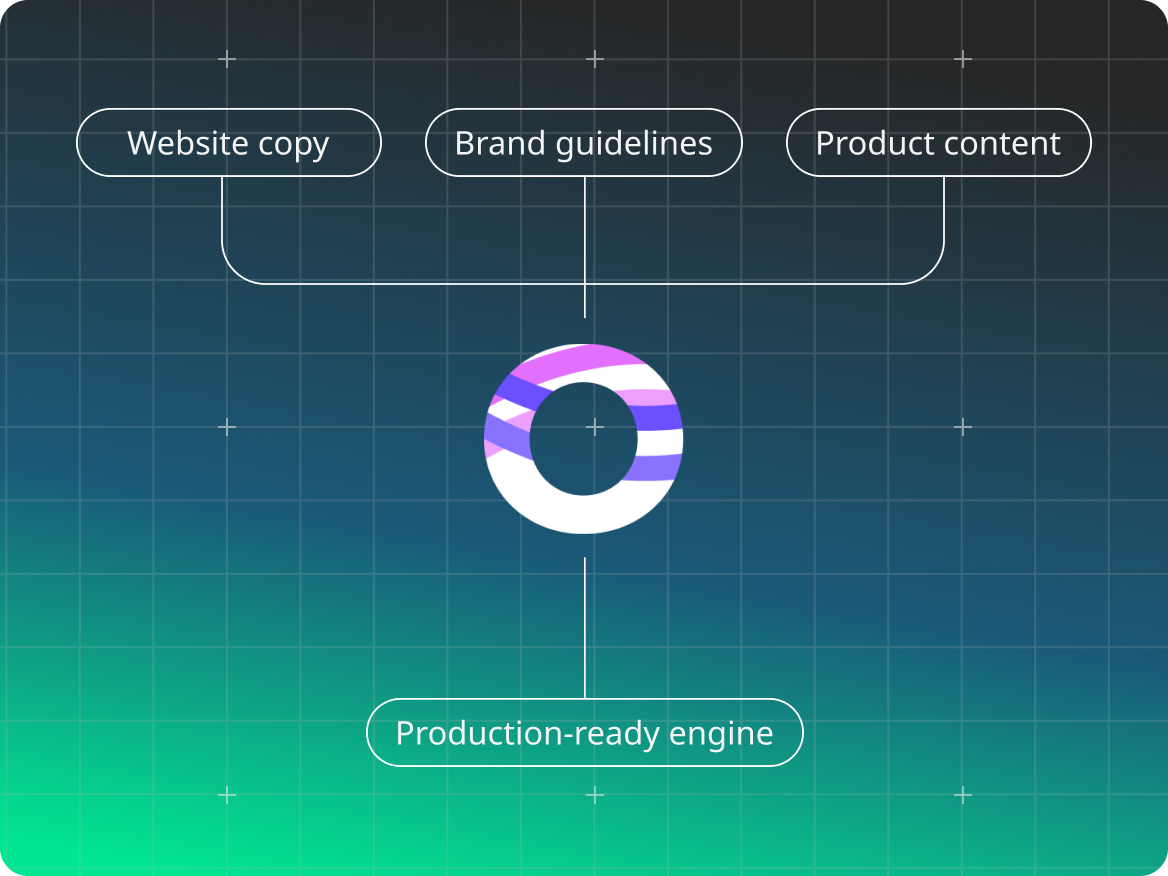
Opal still calibrates to your content, terminology, and voice using whatever assets you do have. You don’t need a decade of translation memory to get the engine to a production-ready quality bar.
COMMON QUESTIONS
Answers to the questions you were going to ask anyway.
General LLMs are built for chat. They weren’t trained for production multilingual output and can’t be calibrated to your terminology, style, or translation memory. In the Opal Benchmark 1.0, Opal was ranked #1 by blind linguist reviewers on 57% of segments, a 19-point lead over the nearest tested MT system. General LLMs performed worse, not better.
Opal is an agentic system, not a single MT model. It orchestrates multiple steps, quality checks, and decision logic around the translation task rather than producing one-shot output. Opal is live in production today, in use at more than a dozen enterprise customers, called via API.
No. Opal is called via API and works alongside your existing TMS or CAT tool rather than replacing it. It’s designed to fit into the workflows and systems you already have in place.
Your existing translation memory continues to work as it does today. Opal is additive: it operates via API alongside your current systems, so your TM assets aren’t displaced or disrupted.

The best translation you can’t tell was machine-made.
Opal is the AI engine that quietly sits behind your existing localization operation and lifts its quality bar. Book a demo and we’ll show you Opal running on your content, not ours.


 Dan O’Brien
 Erin Wynn
 Chris Grebisz
 Christy Conrad
 Matt Grebisz
 Siobhan Hanna
 Kimberly Olson
 Nicole Sheehan